

Conferencias invitadas
14 de Octubre del 2026
CONFERENCIA DE APERTURA DEL CONGRESO
Blaming the Victim: How Rape Myths and Stereotypes Shape Responses to Sexual Assault
Biografía:
Barbara Krahé is Professor Emerita of Social Psychology at the University of Potsdam, Germany and was head of the Social Psychology lab in the Department of Psychology from 1993 until 2021. Her research interests lie in the field of Applied Social Psychology, in particular aggression research (sexual aggression, media violence and aggression) and social information processing in legal contexts (rape myths and victim blaming in judgments about sexual assault). She is Associate Editor of Aggressive Behavior and a member of the editorial board of several academic journals. She is a Fellow of the British Psychological Society and the Association for Psychological Science, a Life Fellow of the International Society for Research on Aggression (ISRA), and a member of the Berlin-Brandenburg Academy of Sciences and the Humanities. She was President of ISRA from 2018 to 2020 and Past-President until July 2022. For her achievements in the field of social psychology, particularly aggression research, she received the German Psychology Prize 2015.
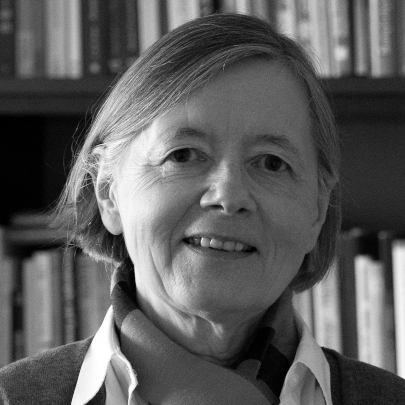
Prof. Barbara Krahé
Es profesora emérita de Psicología Social en la Universidad de Potsdam (Alemania) y fue directora del laboratorio de Psicología Social del Departamento de Psicología desde 1993 hasta 2021.
16 de Octubre del 2026
CONFERENCIA DE CLAUSURA DEL CONGRESO
Segregation: A social and environmental psychological perspective
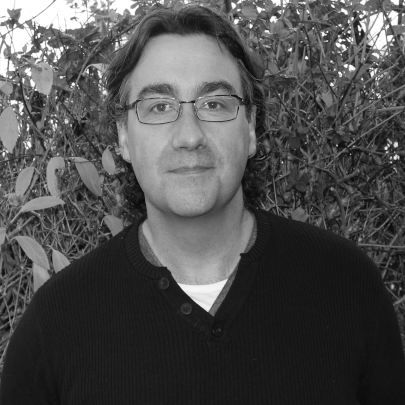
Prof. John Dixon
John Dixon es profesor de Psicología Social en la Open University, anteriormente trabajó en la Universidad de Lancaster, la Universidad de Worcester y la Universidad de Ciudad del Cabo.
Biografía:
John Dixon is professor of social psychology at the Open University, having previously worked at Lancaster University, the University of Worcester, and the University of Cape Town. His publications include Racial Encounter: The Social Psychology of Contact and Desegregation, co-authored with Kevin Durrheim, and Beyond prejudice: Extending the social psychology of intergroup conflict, inequality and social change, co-edited with Mark Levine. He has also published numerous articles and chapters on the relationship between place identity, segregation and social change, focusing particularly on relations in post-apartheid South Africa and post-accord Northern Ireland.
Despite decades of legal reform and policies promoting integration, segregation remains an enduring feature of social life in many historically divided societies. This keynote argues that understanding its nature, persistence, and consequences requires a psychological level of analysis – one that situates individuals’ lived experiences within the material and symbolic landscapes they inhabit. Drawing on a 25-year research programme in post-apartheid South Africa and post-accord Northern Ireland, I outline a social and environmental psychological perspective, linking everyday spatial practices and perceptions of place to broader processes of intergroup division and inequality. This perspective helps to explain why segregation often endures long after its formal dismantlement by elucidating how people perceive, navigate, and emotionally invest in the symbolic boundaries that separate groups. I also consider how psychologically-informed research might support efforts to foster more inclusive communities. Ultimately, in order to promote social change, psychologists need to move beyond disciplinary siloes, working collaboratively with geographers, sociologists, and practitioners in urban planning to transform both the psychological and material conditions of everyday life.
Biografía:
John Dixon is professor of social psychology at the Open University, having previously worked at Lancaster University, the University of Worcester, and the University of Cape Town. His publications include Racial Encounter: The Social Psychology of Contact and Desegregation, co-authored with Kevin Durrheim, and Beyond prejudice: Extending the social psychology of intergroup conflict, inequality and social change, co-edited with Mark Levine. He has also published numerous articles and chapters on the relationship between place identity, segregation and social change, focusing particularly on relations in post-apartheid South Africa and post-accord Northern Ireland.
Despite decades of legal reform and policies promoting integration, segregation remains an enduring feature of social life in many historically divided societies. This keynote argues that understanding its nature, persistence, and consequences requires a psychological level of analysis – one that situates individuals’ lived experiences within the material and symbolic landscapes they inhabit. Drawing on a 25-year research programme in post-apartheid South Africa and post-accord Northern Ireland, I outline a social and environmental psychological perspective, linking everyday spatial practices and perceptions of place to broader processes of intergroup division and inequality. This perspective helps to explain why segregation often endures long after its formal dismantlement by elucidating how people perceive, navigate, and emotionally invest in the symbolic boundaries that separate groups. I also consider how psychologically-informed research might support efforts to foster more inclusive communities. Ultimately, in order to promote social change, psychologists need to move beyond disciplinary siloes, working collaboratively with geographers, sociologists, and practitioners in urban planning to transform both the psychological and material conditions of everyday life.
Prof. John Dixon
John Dixon es profesor de Psicología Social en la Open University, anteriormente trabajó en la Universidad de Lancaster, la Universidad de Worcester y la Universidad de Ciudad del Cabo.
ORGANIZA Y PROMUEVE


COLABORAN